Halloween is supposed to be spooky, but the last thing you want is an actual emergency involving your cat. Unfortunately, between the decorations, candy, costumes and constant opening and closing of doors, there are plenty of opportunities for curious cats to get themselves into trouble.
And if you’ve ever lived with a particularly nosy cat, you know that telling them something is off-limits only makes it about 100 times more interesting.
I have six cats, ranging from a senior who has pretty much seen it all to two kittens who are absolutely convinced that everything in the house exists for their personal entertainment. So, believe me when I say that Halloween decorations and curious cats aren’t always the best combination.
Fortunately, you don’t have to give up decorating or celebrating altogether. A few simple precautions can help keep your cats safe while still letting you enjoy the holiday.
Here are my favorite Halloween safety tips for cats, including a few hazards that are surprisingly easy to overlook.
1. Keep Halloween Candy Far Away From Curious Paws
Halloween candy is one of the biggest hazards for pets, and while dogs tend to get most of the warnings, cats aren’t immune to the risks.
Chocolate contains theobromine and caffeine, both of which are toxic to cats. Dark chocolate and baking chocolate are especially dangerous because they contain higher concentrations of these compounds.
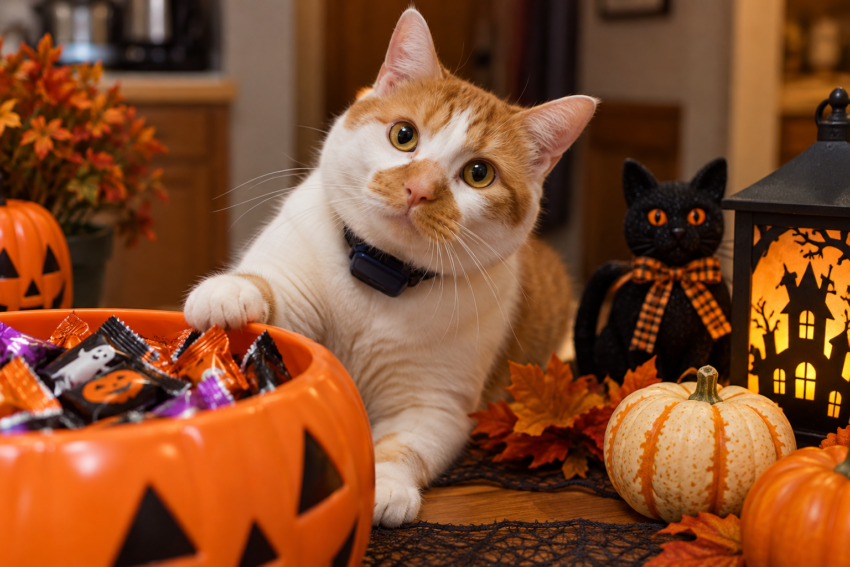
Fortunately, most cats aren’t particularly interested in eating chocolate. Unfortunately, that doesn’t mean they’ll leave the candy bowl alone.
Some cats love playing with crinkly wrappers, batting candy across the floor or chewing on things they really shouldn’t. Swallowed wrappers can cause choking or intestinal blockages, even if the candy itself never gets eaten.
A few simple precautions:
- Keep candy in a closed cabinet or other secure location rather than leaving bowls unattended.
- Throw away candy wrappers immediately, especially those little cellophane ones that seem to end up everywhere.
- Watch out for sugar-free candy and other products containing xylitol. While its toxicity in cats is less clearly established than in dogs, it’s still not something they should be eating.
- Make sure children understand that Halloween candy isn’t for sharing with pets.
If you suspect your cat has eaten chocolate or another potentially toxic treat, contact your veterinarian or an animal poison control service right away. Don’t wait for symptoms to appear.
2. Be Extra Careful When Opening the Door
Even indoor cats who normally show absolutely no interest in the outside world can suddenly decide that Halloween is the perfect night to explore it.
And really, can you blame them? There’s a whole parade of interesting smells, strange noises and people wandering around outside.
The problem is that an escaped cat can become frightened or disoriented very quickly, especially with all the extra activity happening on Halloween night.
If you’re expecting trick-or-treaters, consider keeping your cat in a separate room with food, water, a litter box and a comfortable place to relax. This is especially important for cats who are easily startled or have a habit of making a run for it whenever someone opens the door.
Extra tip: Make sure your cat is microchipped and that your contact information is up to date. Even strictly indoor cats should have identification because accidents happen. A breakaway collar with an ID tag provides another way for someone to identify your cat if they get outside.
If you have a particularly determined escape artist, you might also consider a cat GPS tracker. Just remember that trackers are an extra precaution, not a replacement for a secure door or microchip. Many also have limitations when it comes to size, battery life and location accuracy.
The PetSafe GPS Cat Tracker combines real-time GPS tracking, customizable safe zones, escape alerts and activity monitoring in a lightweight design with an included breakaway safety collar. It also tracks distance and rest, includes a handy locating tone and comes with a free 3-month subscription.

3. Choose Halloween Decorations With Cats in Mind
This is probably my biggest personal Halloween challenge because I have cats who believe that anything new brought into the house is automatically a toy.
And if it dangles, crinkles, rolls or lights up? Even better.
Unfortunately, some of the most popular Halloween decorations are also the most tempting (and potentially dangerous) for cats.
A few decorations I’d be particularly careful with include:
- Fake spiderwebs: Cats can get tangled in the stretchy material or swallow pieces of it. Ingested fibers can cause dangerous intestinal blockages.
- Dangling decorations: Hanging ghosts, bats and other decorations can be irresistible to cats who love batting at things. Strings and ribbons are particularly dangerous if swallowed.
- Electrical cords: Light-up decorations often come with cords that curious kittens may chew. Damaged cords can cause burns or electric shock.
- Small decorative pieces: Plastic spiders, eyeballs and other tiny decorations can become choking hazards or cause intestinal obstructions.
- Breakable decorations: Ceramic pumpkins and glass decorations can shatter if knocked off a shelf (and some cats consider clearing shelves part of their daily responsibilities).
My general rule is pretty simple: If I can imagine one of my cats trying to eat it, climb it, knock it over or drag it across the house, I reconsider where I’m putting it. Which, admittedly, eliminates quite a few decorating possibilities. You should see me try to decorate for Christmas!
Don’t Forget About Battery Compartments
Battery-operated decorations are often safer than those with open flames, but they’re not completely risk-free.
Make sure the battery compartments are securely closed, especially on decorations containing button batteries. Swallowed batteries can cause serious internal injuries.
If a decoration uses a small, easily accessible battery compartment, I’d keep it somewhere cats can’t reach.
4. Skip the Real Candles in Jack-o’-Lanterns
I love the look of a glowing jack-o’-lantern, but an open flame and a curious cat are not a combination I’d recommend.
Cats can burn their whiskers, paws or fur by getting too close to a candle. And if they knock over a pumpkin or candleholder, there’s also the possibility of starting a fire.
Battery-operated LED candles are a much safer alternative. You get the same cozy Halloween glow without worrying about someone setting their tail on fire.
Just make sure the LED lights themselves are securely enclosed and that your cat can’t access or chew the batteries.
These LEDs slowly cycle through seven colors automatically, creating a playful moving display. The white body and melted-edge design blend easily into pumpkins, frosted holders and lanterns.

Are Pumpkins Safe for Cats?
Plain, cooked pumpkin is generally safe for cats in small amounts, and it’s even included in some commercial cat foods and treats.
However, that doesn’t mean you should let your cat snack on your Halloween decorations.
Raw pumpkin chunks, stems and large pieces of rind can present choking or digestive hazards. Moldy pumpkins are another concern, particularly when jack-o’-lanterns have been sitting outside for several days.
And pumpkin pie filling is a completely different story because it can contain sugar, spices and other ingredients that aren’t appropriate for cats.
If you want to share a little pumpkin with your kitty, stick with plain, unseasoned pumpkin puree instead.
5. Think Before Dressing Your Cat in a Halloween Costume
I know. Cat Halloween costumes can be ridiculously adorable.
But here’s the thing: Most cats don’t particularly appreciate being dressed up. Some tolerate it, a few genuinely seem comfortable wearing clothes and others act like you’ve personally betrayed them the moment you put something over their heads.
If your cat falls into that last category, skip the costume.
Stress isn’t worth a cute picture.
If your cat does tolerate wearing something, keep these safety tips in mind:
- Choose lightweight costumes that don’t restrict movement, breathing or vision.
- Avoid costumes with dangling strings, bells or small decorations that could be chewed off.
- Make sure your cat can walk, jump and use the litter box normally.
- Never leave a costumed cat unattended.
- Remove the costume immediately if your cat seems uncomfortable or distressed.
And don’t assume that a cat who freezes in place is enjoying the experience. Freezing can actually be a sign of stress.
Personally, I think a cute Halloween-themed breakaway collar or a simple bandana (if your cat tolerates it) is usually a better option than a full costume.
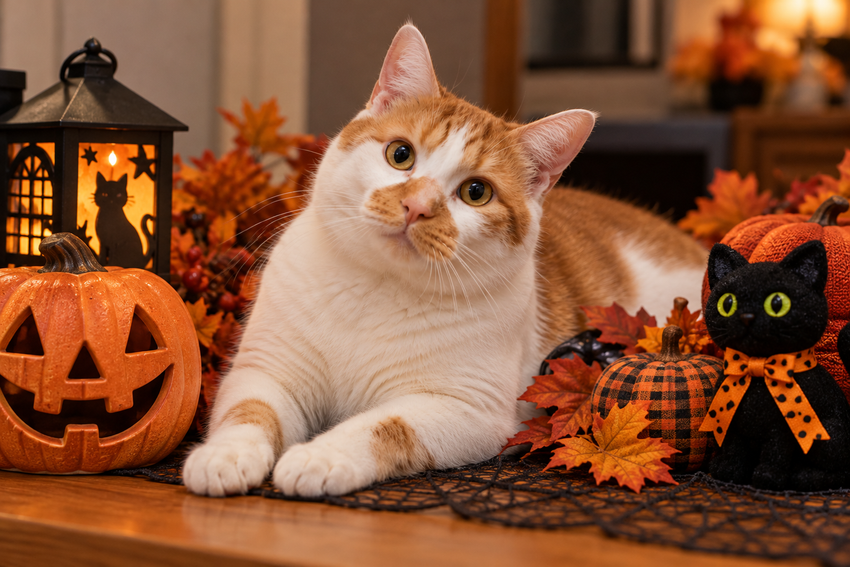
Or you could just take a picture of your cat sitting next to a pumpkin. Much easier, and the cat gets to keep their dignity.
6. Give Nervous Cats a Quiet Place to Hide
Halloween can be a lot for cats who are sensitive to noise or changes in their environment. Between doorbells, unfamiliar voices, excited children and strange decorations, even a normally confident cat might decide that hiding under the bed is the best way to spend the evening.
And that’s perfectly fine. Cats don’t need to participate in Halloween festivities to enjoy a perfectly good October 31st.
If you’re having guests over or expecting lots of trick-or-treaters, set up a quiet space where your cat can retreat. Include their usual essentials, along with familiar blankets or bedding. A favorite hiding spot or covered cat bed can help them feel more secure.
You can also try playing soft music or using a white noise machine to help mask some of the activity outside.
One important thing: Don’t force a frightened cat to come out and socialize. Let them decide when they’re comfortable.
And if your cat tends to become extremely anxious during holidays or other noisy events, talk to your veterinarian ahead of time about ways to help manage their stress.
Made with plush sherpa material, this kitty house offers 25% more space for your furbaby to lounge and play in. The enclosed bottom area provides a secure hideaway, while the open top platform is perfect for napping.

7. Be Careful With Glow Sticks and Glow Jewelry
Glow sticks are popular Halloween accessories, especially for kids who are out trick-or-treating after dark.
Unfortunately, they can also be very appealing to cats. A cat might mistake a glow stick or glowing bracelet for a toy and bite into it, releasing the liquid inside.
Most glow sticks contain dibutyl phthalate or similar chemicals that typically cause irritation rather than serious poisoning when a small amount is tasted. However, the liquid tastes extremely unpleasant and can cause dramatic drooling, foaming at the mouth, gagging and agitation.
The reaction can look frightening, even when the exposure isn’t life-threatening.
If your cat bites into a glow stick, contact your veterinarian or pet poison control for guidance. They may recommend gently rinsing residue from your cat’s mouth or offering a little water or food if your cat is alert and swallowing normally.
Keep glow jewelry and discarded glow sticks somewhere your cat can’t get to them.
8. Watch Out for Halloween Flowers and Seasonal Plants
Halloween and fall decorations often include seasonal flowers and plants, and some of them aren’t particularly cat-friendly.
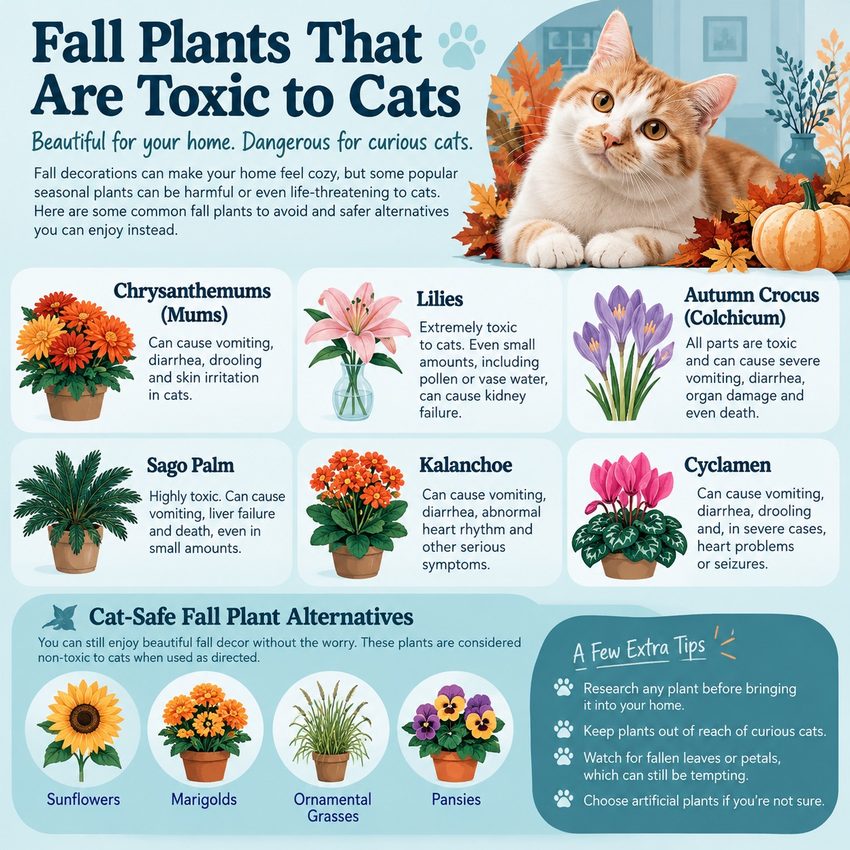
Chrysanthemums, for example, are toxic to cats and can cause vomiting, diarrhea, drooling and other symptoms if eaten.
Certain other seasonal plants can also cause problems, depending on the species.
And while they’re not specifically a Halloween flower, lilies deserve a special warning because they’re extremely dangerous to cats. Even small exposures to true lilies and daylilies, including pollen or vase water, can cause life-threatening kidney damage.
If you have cats, I recommend skipping lilies entirely rather than trying to find a safe place to display them. For other seasonal arrangements, check the individual plants before bringing them into your home.
Remember that even plants considered nontoxic can cause stomach upset if your cat eats enough of them.
9. Don’t Forget About Essential Oils and Scented Decorations
Pumpkin spice, cinnamon, cloves and other fall scents are everywhere this time of year. And while I understand wanting your house to smell like autumn, it’s important to be careful about how you introduce those fragrances when you have cats.
Some essential oils can be toxic to cats, particularly when they’re concentrated or used in diffusers that release oil droplets into the air.
Cats can be exposed by inhaling the oils, getting them on their fur or licking residue from surfaces. Be especially cautious with oils such as cinnamon, clove, tea tree, eucalyptus and certain citrus oils.
The safest approach is to avoid using essential oil diffusers around cats, particularly in enclosed spaces.
Scented candles and plug-in air fresheners can also irritate sensitive cats, even when they don’t contain the same concentrations of essential oils.
If you notice sneezing, coughing, watery eyes or other signs of irritation after introducing a new fragrance, remove the product and contact your veterinarian if symptoms persist.
10. Keep Your Cat Indoors on Halloween Night
This is especially important for cats who normally spend time outdoors. Halloween brings more people, traffic and activity into neighborhoods than usual. Even if your cat is familiar with the area, all that extra commotion can make it easier for them to become frightened, run into the street or get lost.
I’d recommend keeping outdoor-access cats inside for Halloween night, ideally bringing them in well before the evening activity begins.
If your cat isn’t used to staying inside, prepare a comfortable area with a litter box, water and somewhere to rest.
What About Black Cats on Halloween?
There’s a longstanding concern about black cats being targeted for cruelty around Halloween.
While stories about widespread Halloween-related attacks on black cats aren’t well supported by evidence, that doesn’t mean outdoor cats are completely safe.
The bigger, more predictable risks are traffic, unfamiliar people, noise and the possibility of getting lost.
And those risks apply to cats of every color.
So whether your cat is black, orange, white or some complicated combination of all three, keeping them indoors during the festivities is the safest choice.
11. Clean Up Halloween Decorations and Party Supplies Promptly
Once Halloween is over, it’s tempting to leave the cleanup for the next morning. Unfortunately, that gives curious cats several hours to investigate everything you forgot to put away.
Things like curling ribbon, costume accessories, candy wrappers, confetti and discarded decorations can all become potential hazards.
I’d be especially careful with anything long and string-like. Cats can swallow ribbon, thread or string, which can become trapped in their digestive tract and cause serious internal injuries.
If you ever notice string hanging from your cat’s mouth or rear end, don’t pull it. Doing so can cause additional damage. Contact your veterinarian immediately.
Before heading to bed, do a quick sweep of the areas where you celebrated and make sure anything potentially dangerous is put away.
It’s a small step that can prevent a much bigger problem later.
12. Know What to Do if Your Cat Gets Into Something Dangerous
Even with the best precautions, accidents can happen. Cats are exceptionally talented at finding the one thing you forgot to put away.
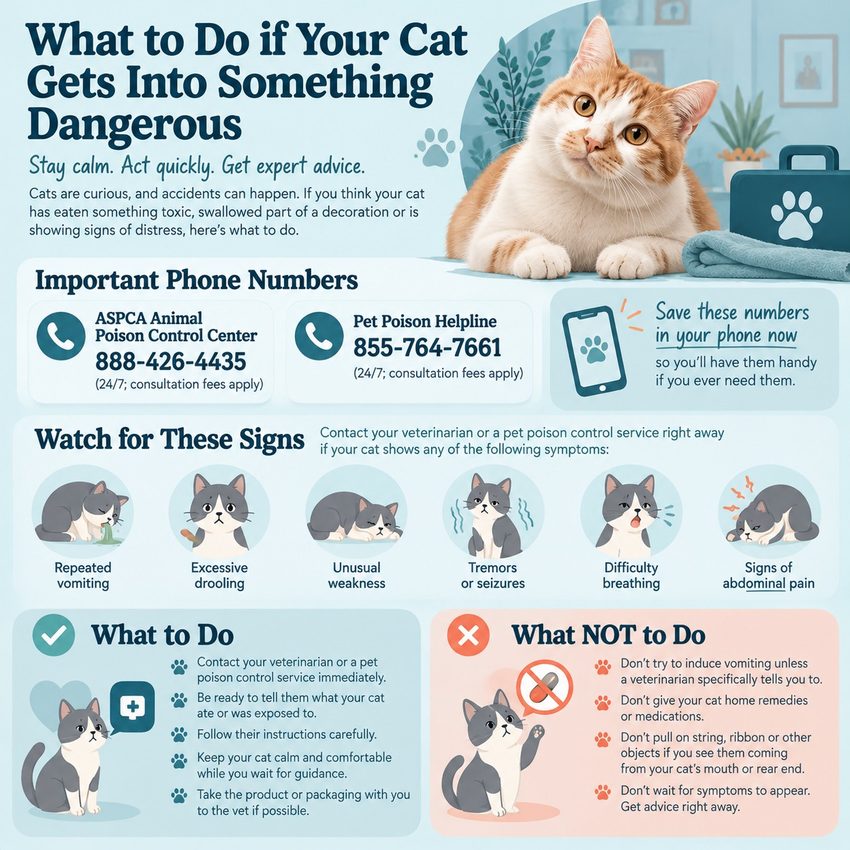
If your cat eats something potentially toxic, swallows part of a decoration or shows signs of distress, contact your veterinarian or an emergency animal hospital immediately.
Symptoms that deserve prompt attention include repeated vomiting, difficulty breathing, excessive drooling, tremors, unusual weakness, seizures or signs of abdominal pain.
Keep these numbers handy:
- ASPCA Animal Poison Control Center: 888-426-4435
- Pet Poison Helpline: 855-764-7661
Both services operate 24/7, and consultation fees may apply.
Don’t try to induce vomiting or give your cat home remedies unless a veterinarian specifically instructs you to do so. Some substances can cause even more damage if they’re brought back up.
It also helps to keep a basic pet first aid kit in an easily accessible location. While it won’t replace veterinary care, having supplies ready can make handling minor injuries a little easier.
Final Thoughts: A Safe Halloween Is a Happy Halloween for Your Cat
You don’t have to turn your house into a completely decoration-free zone just because you have cats. You just have to think a little differently about what you put out and where you put it.
For me, that means looking at every decoration through the eyes of a cat who has absolutely no sense of self-preservation and an unreasonable amount of confidence in their own abilities.
With six cats in the house, I’ve learned that something doesn’t have to look remotely like a cat toy to become one.
A few sensible precautions, some carefully chosen decorations and a little extra attention to open doors can go a long way toward keeping everyone safe.
And if your cat would rather spend Halloween sleeping in a cardboard box than participating in the festivities, that’s fine too. In fact, they’re probably having a better evening than the rest of us.