
Looking for the best ways to stop a kitten from biting? Kittens are adorable little creatures. Right up until they sink those needle-sharp teeth into your fingers, toes, or whatever other body part happens to be within reach.
The good news? Biting is perfectly normal kitten behavior. They’re learning how to play, exploring the world with their mouths, and sometimes dealing with the discomfort of teething. Unfortunately, they haven’t quite figured out that human skin isn’t nearly as tough as their littermates’ fur.
That doesn’t mean you have to put up with being your kitten’s personal chew toy, though.
With a little patience, consistency, and a better understanding of why kittens bite in the first place, you can teach your little troublemaker to keep those teeth to themselves.
Let’s look at why kittens bite and eight practical ways to put a stop to it.
How to Stop a Kitten From Biting: 8 Tips That Actually Help
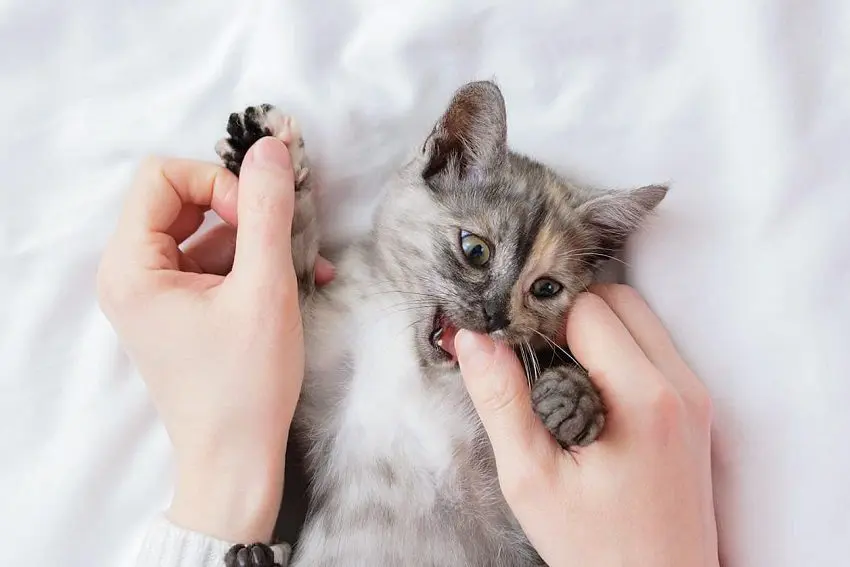
“Help! How can I train my kitten not to bite when we’ve tried everything?”
If your kitten seems determined to attack every moving finger, toe, or ankle in the house, you’re definitely not alone. Most kittens go through a biting phase, and some are a little more enthusiastic about it than others.
The key is teaching your kitten what’s acceptable to bite and what isn’t. You don’t want to discourage their natural instincts to play, hunt, and explore. You just want to convince them that your hands aren’t part of the toy collection.
Here are eight ways to help your kitten learn some manners (preferably before your ankles take any more damage).
1. Understand Why Your Kitten Bites
Before you can teach your kitten to stop biting, you need to figure out why they’re doing it in the first place.
Biting is completely normal for kittens. It’s how they play, explore their surroundings, and practice those hunting skills they’ll probably never need (unless you count stalking your feet under the blankets).
The goal isn’t to stop your kitten from biting everything. It’s to teach them what’s okay to bite and what’s off-limits, particularly your fingers and ankles.
Here are some of the most common reasons kittens bite:
- Play and overexcitement: Kittens are natural hunters, and anything that moves can become prey. When playtime gets a little too exciting, they may forget that your hands aren’t toys. Some kittens also get so worked up that pulling away only makes them more determined to attack.
- Teething: Kittens typically start losing their baby teeth around 3 to 4 months old. Just like human babies, they may chew on things to help with the discomfort. Unfortunately, your fingers might be among their preferred teething toys.
- Overstimulation: Some kittens love being petted, but only up to a point. Too much touching can overwhelm them, and a quick bite is their way of saying they’ve had enough. Learning where and how your cat likes to be petted can help you avoid crossing that line.
- Fear or discomfort: A frightened kitten may bite to defend themselves, especially if they feel trapped or can’t get away.
- Pain or illness: If your kitten suddenly starts biting when touched, especially in a specific area, they may be hurting. A vet visit is a good idea if the behavior is new, unusual, or accompanied by other symptoms.
Pay attention to what happens right before your kitten bites. Are they in the middle of an energetic play session? Have you been petting them for a while? Are they chewing on everything they can find?
Once you recognize what’s triggering the biting, it’s much easier to figure out how to handle it.
2. Play With Your Kitten (A Lot!)
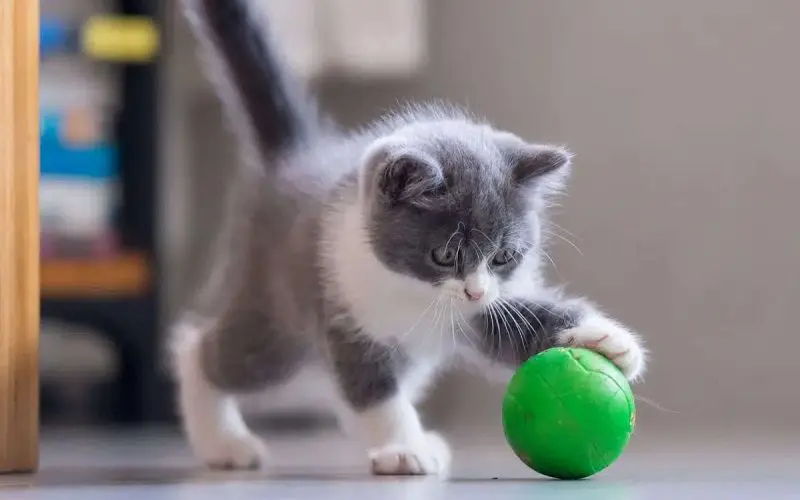
One of the best ways to keep your kitten from treating you like a walking chew toy is to make sure they’re getting enough playtime.
Kittens have an impressive amount of energy for creatures that spend so much of their day sleeping. And when they don’t have an appropriate outlet for that energy, your hands, feet, and ankles become convenient targets.
Regular play sessions help your kitten burn off some of that energy while satisfying their natural hunting instincts. They’re also a great way to bond with your new little troublemaker.
Try using wand toys, balls, or stuffed mice that encourage your kitten to chase, pounce, and wrestle without involving your actual body parts.
One important rule: Never use your hands or feet as toys. It’s adorable when a tiny kitten grabs your fingers and gives them a few playful nibbles. It’s considerably less adorable when that same kitten grows into a 12-pound cat who still thinks your hands are fair game.
Aim for several short play sessions throughout the day rather than one marathon session. Kittens tend to do better with frequent bursts of activity, and you don’t want to push them past the point of exhaustion.
And if your kitten gets overly excited and starts biting during playtime, take a short break. Sometimes they need a chance to settle down before they’re ready to play nicely again.
The goal isn’t to wear your kitten out until they physically can’t bite you. It’s to give them enough healthy outlets for their energy that attacking you becomes a lot less interesting.
3. Redirect Your Kitten’s Attention
One of the easiest ways to teach your kitten not to bite is to give them something more appropriate to sink those tiny teeth into. After all, kittens aren’t trying to be little terrors (well, usually). They’re exploring, playing, and sometimes dealing with sore gums from teething.
Keep a few toys handy so you can redirect your kitten’s attention when they start treating your fingers or toes like chew toys. Wand toys, plush mice, and kitten-safe chew toys are all good options.
The trick is to be consistent. Every time your kitten starts biting, stop the interaction and offer an appropriate toy instead. You want them to learn that toys are for biting, while human hands are not.
If your kitten is teething, dental chews may also be worth considering. Ari’s Purrfect Cat Dental Bites are specially sized and shaped for feline teeth and contain SHMP, an ingredient that helps prevent plaque from hardening into tartar. They’re designed to support dental health, but they also give cats something appropriate to chew on. Just make sure your kitten meets the product’s age recommendations before offering them.
Support your cat's dental health with these tasty, feline-sized chews. Formulated with sodium hexametaphosphate (SHMP), they help prevent plaque from hardening into tartar. An easy addition to your cat's daily dental care routine).
Best Price on the Web
Save 25% with Coupon Code PURRFECT25

4. Reward good behavior

It’s easy to focus on what your kitten is doing wrong, especially when they’re hanging off your arm with all four paws and a mouthful of teeth. But rewarding the behavior you want to see is just as important as discouraging biting.
For example, if your kitten plays with a toy instead of attacking your fingers, reward them with a small treat, some praise, or a little extra playtime. The idea is to help them associate appropriate play with good things.
Timing matters, though. You want to reward your kitten while they’re behaving appropriately, not immediately after they’ve bitten you. Otherwise, they might get the wrong idea about what earned them that tasty snack.
You can also reward your kitten for staying calm when you pet them or handle their paws. Start with short interactions and gradually work up to longer ones as they become more comfortable.
And remember, consistency is important. If you let your kitten wrestle with your hands one day but scold them for doing the exact same thing the next, they’re going to have a hard time figuring out the rules.
Everyone in the household should follow the same approach. Hands are for petting, toys are for biting, and good behavior gets rewarded.
You don’t need to hand out treats every time your kitten does something right, either. Praise, attention, and play can all be effective rewards.
If you want to try making your own training treats, check out our easy homemade salmon cat treat recipe. Just keep treats small and age-appropriate so you’re not filling up your kitten before dinner.
5. Stop Playing When Your Kitten Bites
Sometimes the best response to a biting kitten is to stop giving them what they want: your attention.
If your kitten sinks their teeth into your hand during playtime, stop moving and calmly disengage. Don’t yank your hand away or start waving it around. That can make you look even more like prey, which is probably the last thing you want.
Once your kitten lets go, end the play session for a short time. You can turn away, stand up, or walk away if it’s safe to do so.
The idea is simple: Biting people makes playtime stop. Playing nicely keeps the fun going.
You might have heard that you should let out a loud squeal or yelp when your kitten bites, supposedly mimicking how another kitten would react.
That works for some kittens, but others get even more excited by the noise. And some just get frightened, which isn’t what we’re going for.
A calm, consistent response is usually a better place to start.
Don’t expect your kitten to understand the rules immediately, though. You’ll probably have to repeat this lesson quite a few times before it sinks in.
6. Consider Whether Your Kitten Needs a Playmate
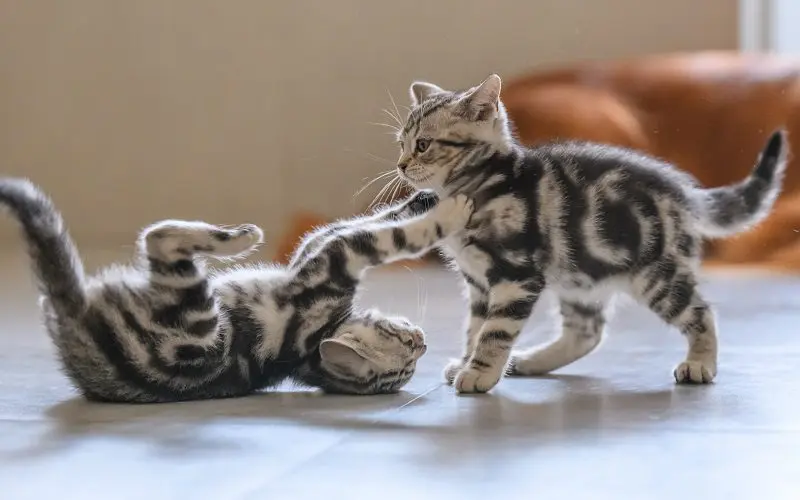
There’s a reason kittens spend so much time wrestling, chasing, and play-fighting with their siblings. They’re learning important social skills, including how hard they can bite before their playmate decides they’ve had enough.
Kittens who grow up without other kittens sometimes miss out on those lessons. They may have a harder time controlling their bites or understanding when play has gotten too rough.
That’s one reason many shelters recommend adopting kittens in pairs, particularly when they’re very young.
But does that mean you should rush out and adopt another kitten because yours keeps biting? Absolutely not.
A second kitten is another living creature who needs food, veterinary care, attention, and a permanent home. That’s a pretty big commitment just to save your ankles.
However, if you’ve already been considering adopting two kittens, there’s something to be said for giving them a similarly aged companion.
They can chase, wrestle, and entertain each other in ways that humans simply can’t replicate. And when one kitten gets a little too enthusiastic with those tiny teeth, the other can communicate that they’ve had enough.
Just remember that getting another kitten isn’t a guaranteed solution to biting. You’ll still need to teach both kittens that human hands and feet aren’t toys.
If you decide to expand your feline family, check out our guide on how to get two cats to get along.
7. Learn to Recognize When Your Kitten Has Had Enough
One of the easiest ways to avoid getting bitten is to recognize when your kitten is about to lose their patience.
Cats don’t always bite without warning. They often give us little signals that they’re getting overstimulated, frustrated, or uncomfortable. The problem is that we’re not always paying attention.
Watch for signs like:
- A tail that’s twitching or lashing back and forth
- Ears turning sideways or flattening against the head
- Dilated pupils and increasingly frantic movements
- Suddenly grabbing your hand during petting
- Restlessness or attempts to move away
- Growling, hissing, or other signs of discomfort
Of course, some of these behaviors are also perfectly normal during play. A kitten crouching with wide eyes and a twitching tail might simply be preparing to pounce on a toy.
Context matters. You have to look at what your kitten is doing and what’s happening around them.
For example, if your kitten is happily chasing a wand toy, those big pupils probably mean they’re excited. If they’re being petted and suddenly start twitching their tail, they might be telling you they’ve had enough attention.
When you notice signs of overstimulation, give your kitten a break before things escalate.
And if your kitten walks away, let them. Following them around for one more cuddle is a pretty good way to discover exactly how sharp those little teeth are.
Learning to respect your kitten’s boundaries now can help prevent biting problems as they get older.
8. Never Punish Your Kitten for Biting

Let’s get one thing straight: Hitting, spraying, or frightening your kitten isn’t going to teach them how to behave.
Unfortunately, you’ll still find people recommending everything from squirt bottles to rolled-up newspapers as ways to stop a kitten from biting.
Some even suggest biting the kitten back. I’m not entirely sure how that’s supposed to work, but please don’t do it.
Physical punishment might temporarily stop the behavior, but it doesn’t teach your kitten what they should do instead.
Worse, it can make them afraid of you or more likely to react defensively.
Think about it from your kitten’s perspective. One minute they’re playing, and the next, the person they trust is suddenly yelling or spraying them with water. They don’t necessarily understand that the biting caused your reaction. They just know something unpleasant happened.
Instead of punishing your kitten, focus on redirecting inappropriate biting, rewarding gentle play, and ending interactions when things get too rough.
If your kitten bites because they’re frightened or uncomfortable, give them space and try to figure out what’s bothering them.
And if the biting seems unusually intense, happens without an obvious trigger, or suddenly gets worse, talk to your veterinarian. Pain, illness, and fear can all contribute to aggressive behavior.
You can also check out our guide on how to train a cat for more positive training tips.
Final Thoughts: Your Kitten Won’t Be a Tiny Land Shark Forever
Teaching a kitten not to bite takes patience, consistency, and a willingness to accept that you’re probably going to get nipped a few times along the way.
The important thing is to remember that your kitten isn’t being bad. They’re learning how to interact with the world, and right now, their teeth are one of their favorite tools.
Give them plenty of opportunities to play, teach them what’s appropriate to bite, and pay attention when they’re telling you they’ve had enough.
Most kittens gradually develop better bite control as they mature, especially when you consistently reinforce good habits.
And while those tiny teeth might be driving you crazy right now, you’ll probably look back on this stage with some fondness someday.
Probably. Just give your ankles a little time to recover first.
Resources: